
“`html
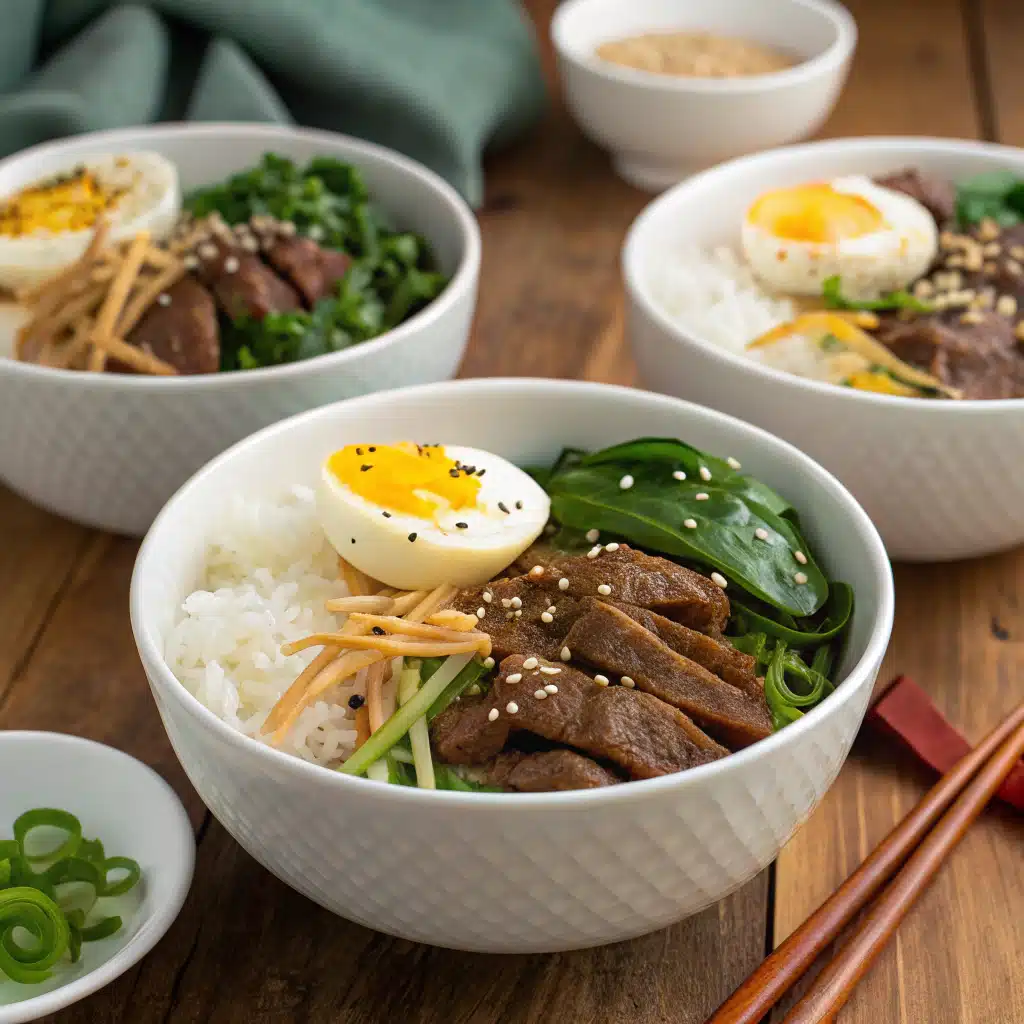
Bulgogi Deopbap: The Ultimate Korean Beef Bowl
Introduction
The Korean Beef Bowl, or Bulgogi Deopbap, is the epitome of Korean comfort food. It takes the smoky, sweet, and savory flavors of traditional bulgogi (marinated grilled beef) and serves it simply over a bed of steaming white rice. Originating from the royal court cuisine, bulgogi literally means “fire meat,” referring to the method of cooking over an open flame. This quick and easy bowl version captures the complex flavors of the classic dish in a convenient weeknight meal that is both deeply satisfying and incredibly flavorful.
Ingredients
- For the Beef:
- 450g (1 lb) thinly sliced beef sirloin or ribeye
- 1/4 cup (60 ml) soy sauce (Korean or low sodium)
- 2 tablespoons (30 ml) sesame oil
- 2 tablespoons (30g) brown sugar or honey
- 1 tablespoon (15 ml) mirin (rice wine)
- 1 tablespoon (15g) minced garlic
- 1 teaspoon (5g) grated fresh ginger
- 1/2 small brown onion, thinly sliced
- 1/2 small Asian pear or apple, grated (optional, for tenderizing)
- Pinch of black pepper
- For the Bowl:
- 3 cups cooked short-grain white rice
- 1 carrot, julienned
- 1 cup spinach, lightly blanched or sautéed
- 1/2 cup sliced shiitake mushrooms (optional)
- Sesame seeds and chopped scallions, for garnish
Step-by-step Preparation
- Marinate the Beef (30 minutes minimum): In a large bowl, combine the soy sauce, sesame oil, brown sugar, mirin, garlic, ginger, grated pear, and black pepper. Whisk until the sugar dissolves. Add the thinly sliced beef and the sliced onion. Toss thoroughly to coat. Cover and refrigerate for at least 30 minutes, or up to 4 hours for maximum flavor absorption.
Tip: For the best texture, partially freeze the beef for 20 minutes before slicing it paper-thin against the grain. - Prepare the Vegetables: While the beef marinates, quickly blanch the spinach (boil for 30 seconds, then immediately plunge into ice water) and sauté the julienned carrots and mushrooms separately in a tablespoon of oil until tender-crisp. Season lightly with salt and a drizzle of sesame oil.
- Cook the Bulgogi (5-7 minutes): Heat a large skillet or wok over medium-high heat. Do not overcrowd the pan; cook the beef in batches if necessary. Add the marinated beef and onions (reserve the excess marinade). Stir-fry quickly until the beef is fully cooked and slightly caramelized, about 5 to 7 minutes.
Tip: High heat is crucial here to achieve a nice sear without stewing the meat. If the pan looks dry, add a splash of the reserved marinade during the last minute of cooking. - Assemble the Bowls: Divide the cooked rice among serving bowls. Arrange the cooked bulgogi mixture neatly over the rice. Artfully arrange the prepared vegetables (spinach, carrots, mushrooms) around the beef.
- Garnish and Serve: Sprinkle generously with sesame seeds and chopped scallions. Serve immediately with a side of kimchi or gochujang (Korean chili paste) for extra heat.
Nutritional Information
A typical serving of this Korean Beef Bowl (approximately 450g) contains around 550-650 calories, depending on the cut of beef used and the amount of sugar in the marinade. It is an excellent source of lean protein (providing essential amino acids), iron (from the beef), and fiber (from the vegetables and rice). The inclusion of fresh garlic and ginger provides beneficial anti-inflammatory compounds, making this a hearty yet relatively balanced meal.
Storage
Leftovers should be stored separately for the best texture. Keep the cooked beef and rice in airtight containers in the refrigerator. The beef bowl ingredients will keep fresh for 3 to 4 days. To reheat, warm the beef in a skillet over medium heat until sizzling, and microwave the rice separately. Avoid freezing the assembled bowl as the texture of the rice and vegetables will degrade upon thawing.
Conclusion
Bulgogi Deopbap is more than just a quick meal; it’s a vibrant tapestry of Korean flavors, perfectly balancing sweet, savory, and umami notes. Feel free to customize your bowl by adding a fried egg (gyeran-fry) on top for richness, or substituting the side vegetables with cucumber kimchi or soybean sprouts. Enjoy this taste of Korea right in your kitchen!
“`